

- University
- Academic
- Schools/Vocational Schools
- Vocational School of Justice
- Vocational School
- Vocational School
- Department of Banking and Insurance (Turkish)
- Department of Computer Programming (Turkish)
- Department of Foreign Trade (Turkish)
- Department of Graphic Design (Turkish)
- Department of Interior Design (Turkish)
- Department of Construction Technology (Turkish)
- Department of Occupational Health and Safety (Turkish)
- Department of Media and Communication (Turkish)
- Department of Architectural Restoration (Turkish)
- Department of Radio and Tv Programming (Turkish)
- Department of Civil Aviation Cabin Services (Turkish)
- Department of Civil Aviation Transportation Management (Turkish)
- Department of Tourism and Hotel Management (Turkish)
- Department of Applied English Translation
- Vocational School Of Health Services
- Vocational School Of Health Services
- Department of Child Development (Turkish)
- Department of Physiotherapy (Turkish)
- Department of Paramedic (Turkish)
- Department of Opticianry (Turkish)
- Department of Medical Documentation and Secreteriat (Turkish)
- Department of Medical Imaging Techniques (Turkish)
- Department of Medical Laboratory Techniques (Turkish)
- Department of Elderly Care (Turkish)
- School of Applied Management Sciences
- School of Foreign Languages
- Faculties
- Faculty of Arts and Sciences
- Faculty of Fine Arts and Design
- Faculty of Law
- Faculty of Communication
- Faculty of Business
- Faculty of Engineering
- Faculty of Engineering
- Department of Computer Engineering
- Department of Biomedical Engineering
- Department of Electrical and Electronics Engineering
- Department of Industrial Engineering
- Department of Food Engineering
- Department of Genetics and Bioengineering
- Department of Aerospace Engineering
- Department of Civil Engineering
- Department of Mechanical Engineering
- Department of Mechatronics Engineering
- Department of Software Engineering
- Faculty of Health Sciences
- Medicine
- Graduate School
- Common Courses
- Schools/Vocational Schools
- Research
- Research Centers
- Library
- Smart Campus
- Technology Transfer Office
- İzmir Sciencepark
- Continuous Education Center (EKOSEM)
- Children's University
- Ethics Committee
- Teaching and Learning Center (EKOEĞİTİM)
- Psychology Application and Research Center
- Researcher Training Coordinatorship
- Research Collaborations And Innovation Coordinatorship
- Campus
- INTERNATIONAL
- Contact
- 25TH YEAR
Department of Civil Engineering
Welcome to the Department of Civil Engineering
Civil Engineering: The Scientific and Structural Foundation of Civilization
Civil engineering is one of the oldest engineering disciplines, emerging from humanity’s need for shelter and playing a fundamental role in the development of civilizations. From the earliest simple shelters to today’s skyscrapers, massive bridges, and smart city projects, construction has always been one of the essential elements of civilization. With scientific and technological advancements, the art of building has continuously evolved and eventually formed the modern discipline of civil engineering.
The Role and Responsibilities of Civil Engineers
Civil engineering is a core branch of engineering that combines materials and technology to plan, design, construct, and supervise structures. The most essential requirements of modern life—such as housing, transportation, clean water, energy, and infrastructure services—are all within the scope of civil engineering. Although civil engineers are often thought to work only in building construction, in reality they are involved in the planning, design, construction, and supervision of all types of structures, including buildings, bridges, roads, sewer systems, tunnels, and various service and industrial facilities. They also conduct education and research activities in these fields. In addition, the key components of economic development—such as industrial plants, logistics centers, airports, ports, dams, and energy production facilities—are brought to life through the contributions of civil engineers. One of the most reliable ways to understand the level of development of a society is to examine the quality of its structures and infrastructure systems.
Areas of Expertise and Employment for Civil Engineers
A civil engineer must possess the knowledge and competence to work on a wide range of projects, from multi-story residential buildings to bridges, high-rise structures, industrial facilities, stadiums, highways, coastal structures, airports, dams, hydroelectric power plants, and renewable energy structures such as wind turbines. This broad field of work divides civil engineering into several areas of specialization. These generally include structural engineering, construction materials, geotechnical engineering, transportation engineering, hydraulic and water resources engineering, construction management, and mechanics-based engineering analysis. Civil engineers may work in construction site management; public institutions such as the General Directorate of Highways, municipalities, the State Hydraulic Works (DSI), and the Ministry of Environment, Urbanization, and Climate Change; building inspection firms; contracting companies; project and consultancy firms; transportation and water structure projects; ground improvement and strengthening works; laboratories for testing and analyzing construction materials; universities for academic research; concrete production plants; cement factories; and prefabrication facilities. The professional signing authority granted to civil engineers, together with the high level of responsibility required by the profession, places them in a critical position within society.

Our Department and Facilities
The Department of Civil Engineering at Izmir University of Economics started its education in the Faculty of Engineering in the 2013-2014 academic year. Our department offers education in English. Students receive comprehensive training in mathematics, physics, and fundamental engineering sciences, as well as in specialized fields such as reinforced concrete, steel structures, soil mechanics, construction materials, transportation systems, hydraulic structures, and computer-aided engineering applications. Theoretical courses are supported by laboratory practices, technical field trips, project-based studies, and modern engineering software in order to enhance students’ professional competencies and practical skills.
Laboratories and Experimental Facilities
Our department is equipped with Structural Mechanics, Construction Materials, Hydraulics, and Soil Mechanics laboratories, where students can conduct experiments and gain hands-on experience relevant to the challenges they may encounter in the engineering industry (https://cie.ieu.edu.tr/en/laboratuvarlarimiz). As part of our practical courses, students conduct various experiments in our laboratories, including steel reinforcement tensile tests, concrete compressive strength tests, aggregate abrasion tests, local and friction losses in pipes, open channel flow experiments, soil consolidation tests, and Proctor compaction tests. During these laboratory sessions, students collect experimental data, prepare technical reports, and analyze and discuss the results obtained from the experiments.
Internships
Our students complete two compulsory internships consisting of at least 20 working days of office internship and at least 20 working days of on-site construction internship. Through these internships, students reinforce the theoretical knowledge gained at university by applying it in real engineering environments. In addition to the compulsory internships, students may also participate in voluntary internships to gain broader industry experience and observation opportunities.
Academic Advising
Each student is assigned an academic advisor from our faculty members. Students may contact and consult their advisors, as well as any other faculty member, at any time regarding any matter they wish to discuss.
Double Major and Minor Programs
Our university offers Double Major Programs and Minor Programs for students who meet the required qualifications. Students have the opportunity to enroll in double major and minor programs across all departments of our university. In addition to graduates who have successfully completed these programs, our department also has students who are currently enrolled in Double Major and Minor programs.
Artificial Intelligence and Emerging Technologies in Civil Engineering
Today’s civil engineers are expected not only to possess traditional engineering knowledge but also to effectively utilize artificial intelligence-supported analysis tools, computer-aided design systems, sensor technologies, robotic applications, and modern construction equipment.
Artificial Intelligence
Artificial intelligence plays a significant role in design, construction site management, maintenance, and infrastructure processes within civil engineering. Our department recognizes the growing impact of artificial intelligence on the future of the profession. AI technologies can analyze different design, material, and cost alternatives to provide optimal solutions; optimize construction schedules by predicting delays; and identify occupational safety risks. Furthermore, through image-processing techniques, AI can detect cracks and deformations at early stages, thereby reducing maintenance costs and extending the lifespan of structures. In smart city applications, artificial intelligence also contributes to the more efficient management of traffic, water, and energy systems.
Emerging Technologies
Emerging technologies in civil engineering contribute to the safer, more durable, and more economical design of structures. Through structural health monitoring systems, sensors installed on bridges, buildings, and dams enable real-time monitoring of data such as vibration, strain, temperature, and displacement, allowing early detection of structural damage. Fiber optic sensors, accelerometers, and wireless sensor networks provide particularly effective rapid assessment capabilities after earthquakes. Non-destructive testing (NDT) methods—including ultrasonic testing, ground penetrating radar (GPR), magnetic techniques, and thermal imaging—allow engineers to identify cracks and defects within structures without causing damage. In addition, digital twin technology enables the real-time digital monitoring of structures, while artificial intelligence and big data analytics help predict maintenance and repair needs in advance. As a result, structures can be digitally monitored and managed throughout their entire life cycle.

Disaster Management
Disasters such as earthquakes, floods, landslides, and fires can cause severe loss of life and property. Earthquakes, in particular, are among the most significant natural disasters affecting Türkiye. Civil engineers contribute to the development of safer cities by reducing the impacts of disasters through resilient structural design, geotechnical investigations, the use of high-quality construction materials, and effective infrastructure planning.
Educational Objectives of the Undergraduate Program in Civil Engineering
Increasing urbanization, population density, natural disaster risks, and sustainability requirements make it essential to design structures that are safer, more economical, and environmentally friendly. Consequently, the demand for highly qualified, innovative, and specialized civil engineers continues to grow rapidly.
The educational objectives of the Civil Engineering undergraduate program have been established in accordance with the needs and expectations of the industry. In line with these objectives, a curriculum consisting of both theoretical and practical courses has been designed to equip students with the necessary professional competencies. With our experienced and distinguished academic staff—who have contributed to numerous national and international publications and projects—we provide a participatory, dynamic, and student-centered educational environment that supports the academic and professional development of our students. The Department of Civil Engineering at Izmir University of Economics aims to educate competent engineers of the future through its strong academic staff, modern laboratory infrastructure, industry-oriented educational approach, and internationally recognized curriculum. With an academic team possessing both national and international experience, strong industry connections, and a practice-oriented education model, the department prepares its students for professional life in the best possible way.
NEWSALL NEWS


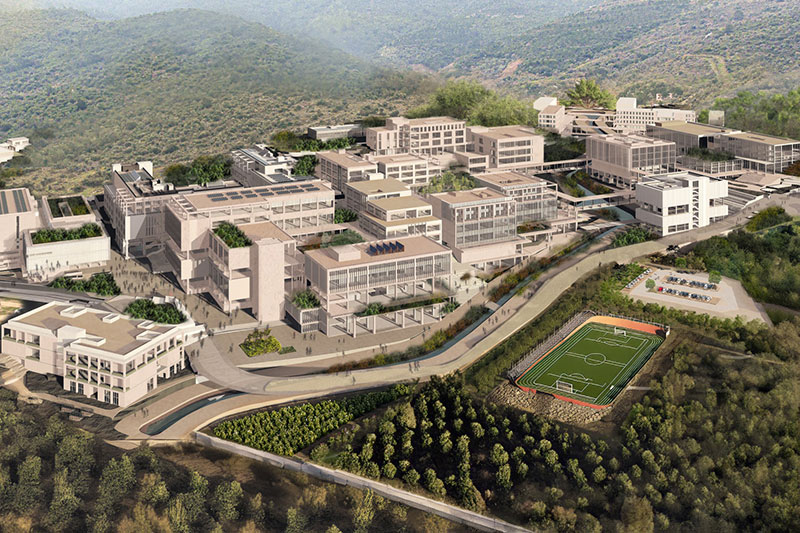
IZMIR UNIVERSITY OF ECONOMICS GÜZELBAHÇE CAMPUS
DetailsGLOBAL CAREER
As Izmir University of Economics transforms into a world-class university, it also raises successful young people with global competence.
More..CONTRIBUTION TO SCIENCE
Izmir University of Economics produces qualified knowledge and competent technologies.
More..VALUING PEOPLE
Izmir University of Economics sees producing social benefit as its reason for existence.
More..
You are one step ahead with your graduate education at Izmir University of Economics.